DNA Storage Technology Commercialization Timeline

Jul 11, 2025 By

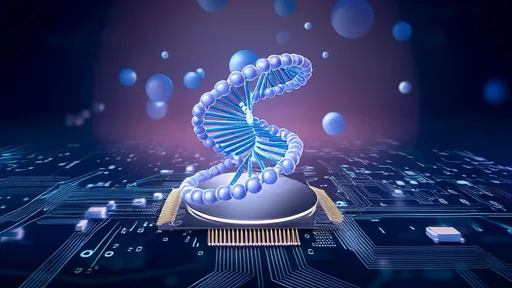
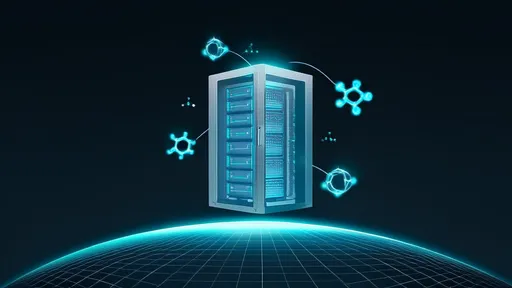
The commercialization of DNA data storage technology is no longer confined to laboratory discussions but has entered the roadmap of practical industrial applications. Over the past decade, advancements in synthetic biology, nanotechnology, and computational methods have accelerated the feasibility of using DNA as a next-generation storage medium. Unlike traditional silicon-based storage, DNA offers unparalleled density and longevity, with the potential to preserve information for thousands of years under proper conditions. Major tech corporations and biotech startups alike are now racing to unlock its commercial potential, though significant hurdles remain before widespread adoption.

The current landscape of DNA storage technology is marked by a blend of optimism and realism. Researchers have successfully encoded everything from classic films to entire books into synthetic DNA strands, demonstrating the medium’s capacity. However, the processes of writing (synthesizing) and reading (sequencing) DNA remain prohibitively expensive for most applications. For instance, encoding a few megabytes of data can cost thousands of dollars, while retrieving it requires specialized equipment and expertise. Despite these challenges, companies like Microsoft, Twist Bioscience, and Catalog are making strides in reducing costs and improving efficiency, signaling that commercialization may be closer than skeptics assume.

One of the most promising developments is the emergence of automated platforms that streamline DNA data storage workflows. Startups such as Molecular Assemblies and Iridia are pioneering enzymatic DNA synthesis techniques, which could drastically lower production costs compared to traditional chemical methods. Meanwhile, advancements in nanopore sequencing—a faster and more portable alternative to conventional sequencing—are addressing bottlenecks in data retrieval. These innovations are critical for transitioning DNA storage from proof-of-concept demonstrations to scalable solutions capable of competing with magnetic tape or cloud storage.

The timeline for commercialization hinges on overcoming both technical and infrastructural barriers. Industry analysts project that DNA storage could first gain traction in niche markets where its unique advantages outweigh current limitations. For example, archival storage for governments, museums, and corporations requiring ultra-long-term data preservation is a likely early adopter. The Library of Congress and several European national archives have already expressed interest in pilot programs. Another near-term application could be in cold storage for big data, where information is written once and accessed infrequently but must remain intact for decades.

Economic factors will play a decisive role in determining how quickly DNA storage moves from labs to data centers. As synthesis and sequencing costs follow trajectories similar to Moore’s Law, the tipping point for affordability may arrive within the next decade. Some estimates suggest that by 2030, storing data in DNA could become cost-competitive with high-end tape storage for certain use cases. However, this assumes sustained investment and no major setbacks in scaling production. Venture capital flowing into synthetic biology and computational storage startups indicates strong confidence in the technology’s eventual viability.

Beyond cost, standardization and ecosystem development are equally critical. Unlike established storage media, DNA lacks universally accepted encoding protocols, error-correction standards, or even physical formats for commercial use. Organizations like the DNA Data Storage Alliance, founded by Microsoft, Twist Bioscience, and others, are working to address these gaps. Their efforts include creating benchmarks for data fidelity, storage conditions, and retrieval speeds—essential groundwork for interoperability and trust in the technology. Without such frameworks, widespread adoption by enterprises or consumers would remain impractical.

Regulatory and ethical considerations add another layer of complexity to commercialization. Synthetic DNA used for data storage must be distinguishable from biological DNA to prevent misuse or accidental contamination in diagnostic or forensic contexts. Policymakers are beginning to grapple with these questions, particularly around biosecurity and intellectual property. How these issues are resolved could either accelerate or hinder market readiness, depending on whether regulations strike a balance between innovation and risk mitigation.

Looking ahead, the 2030s may emerge as the defining decade for DNA storage technology. If current progress continues, we could see the first commercial-grade systems deployed for specialized applications by the mid-2030s, followed by gradual expansion into broader markets. Success will depend not just on technological breakthroughs but on building an entire supply chain—from DNA manufacturers to specialized data centers—capable of supporting the technology at scale. While it’s unlikely to replace flash drives or hard disks anytime soon, DNA storage is poised to carve out a transformative niche in how humanity preserves its most valuable information for future generations.

Recommend Posts
IT

Prospective Analysis of Energy-Supplying IoT Devices

By /Jul 11, 2025

The Internet of Things (IoT) has rapidly evolved over the past decade, connecting billions of devices worldwide. Among the most promising advancements in this field is the emergence of environment-powered IoT devices. These innovative systems harness energy from their surroundings—such as solar, thermal, or kinetic sources—eliminating the need for traditional batteries or wired power supplies. As sustainability becomes a global priority, the potential for self-sustaining IoT networks is capturing the attention of industries, governments, and researchers alike.
IT

DNA Storage Technology Commercialization Timeline

By /Jul 11, 2025

The commercialization of DNA data storage technology is no longer confined to laboratory discussions but has entered the roadmap of practical industrial applications. Over the past decade, advancements in synthetic biology, nanotechnology, and computational methods have accelerated the feasibility of using DNA as a next-generation storage medium. Unlike traditional silicon-based storage, DNA offers unparalleled density and longevity, with the potential to preserve information for thousands of years under proper conditions. Major tech corporations and biotech startups alike are now racing to unlock its commercial potential, though significant hurdles remain before widespread adoption.
IT

Evolution of Spatial Computing Device Interaction Paradigms

By /Jul 11, 2025

The evolution of spatial computing interfaces has been one of the most fascinating technological journeys of the past few decades. From rudimentary command-line inputs to immersive augmented reality (AR) and virtual reality (VR) environments, the way humans interact with machines has undergone a radical transformation. This shift hasn’t just changed how we perform tasks—it has redefined the very nature of human-computer interaction.
IT

Breakthroughs in Holographic Communication Technology Bottlenecks

By /Jul 11, 2025

The field of holographic communication has long been the stuff of science fiction, promising immersive, real-time interactions that transcend physical boundaries. Yet, despite decades of research, the technology has struggled to break free from the confines of laboratories and niche applications. Recent breakthroughs, however, suggest that the era of practical holographic communication may finally be within reach. Engineers and researchers are tackling longstanding bottlenecks with innovative solutions, pushing the boundaries of what was once considered impossible.
IT

Forecasting the Roadmap of Neuromorphic Computing Hardware

By /Jul 11, 2025

The field of neuromorphic computing hardware has been gaining significant traction in recent years, driven by the need for more efficient and brain-inspired solutions to complex computational problems. Unlike traditional von Neumann architectures, neuromorphic systems aim to mimic the neural structures and processes of the human brain, offering potential breakthroughs in energy efficiency, speed, and adaptability. As research progresses, experts are beginning to outline possible trajectories for the development and adoption of these technologies.
IT

A Demonstration of the Lifecycle Interactions of Network Packets

By /Jul 11, 2025

The journey of a network packet is a fascinating odyssey that occurs millions of times every second across the globe, yet remains largely invisible to the average internet user. From the moment you click a link or send a message, your data embarks on an intricate voyage through cables, routers, and servers before reaching its final destination. This behind-the-scenes process powers our connected world, enabling everything from video calls to financial transactions.
IT

A Discussion on Operating System Kernel Security Mechanisms

By /Jul 11, 2025

The security of an operating system fundamentally depends on the robustness of its kernel - the core component that manages system resources and hardware interactions. Kernel security mechanisms have evolved significantly over decades, responding to emerging threats while balancing performance requirements. Modern operating systems employ sophisticated protection schemes that form multiple layers of defense against potential attacks.
IT

Compiler Working Principle Interactive Experiment

By /Jul 11, 2025

Compiler technology sits at the heart of modern computing, yet its inner workings often remain shrouded in mystery for many developers. A new wave of interactive learning tools is changing this landscape by allowing programmers to experiment with compiler components in real-time. These digital laboratories provide hands-on experience with lexical analysis, parsing, optimization, and code generation—the fundamental stages that transform human-readable code into machine-executable instructions.
IT

Visualizing Mathematical Challenges in Cryptography

By /Jul 11, 2025

The world of cryptography is built upon a foundation of complex mathematical problems that resist easy solutions. These problems, often referred to as "hard" problems in computational complexity theory, serve as the backbone for securing digital communications, authenticating identities, and protecting sensitive data. Visualizing these mathematical challenges not only aids in understanding their intricacies but also highlights the elegance of cryptographic systems that rely on them.
IT

Illustrated Guide to Consensus Algorithms in Distributed Systems"

By /Jul 11, 2025

In the rapidly evolving landscape of distributed computing, consensus algorithms have emerged as the backbone of reliable systems. These protocols enable multiple machines to agree on a single data value despite potential failures, forming the foundation for critical applications ranging from database replication to blockchain networks. The growing complexity of modern infrastructure demands a deeper understanding of how these algorithms maintain consistency across decentralized environments.
IT

Influence Graph of Technical Standard Organizations

By /Jul 11, 2025

The landscape of technology standards is shaped by a complex interplay of organizations, each wielding varying degrees of influence over global industries. These entities—ranging from formal consortia to grassroots alliances—determine the protocols, frameworks, and specifications that underpin everything from wireless communication to artificial intelligence. Their power dynamics are rarely visible to the public, yet their decisions ripple across supply chains, markets, and even geopolitical arenas.
IT

Assessment of Developer Ecosystem Operations Effectiveness

By /Jul 11, 2025

The effectiveness of developer ecosystem operations has become a critical factor in the success of modern technology platforms. Companies investing in robust developer communities often see higher adoption rates, improved product innovation, and sustained long-term growth. However, measuring the true impact of these efforts requires a nuanced approach that goes beyond superficial metrics like the number of registered developers or downloads.
IT

Trends in the Adjustment of Patent Strategies for Technology Companies

By /Jul 11, 2025

The landscape of patent strategies among technology companies has undergone significant transformation in recent years. As innovation cycles accelerate and global competition intensifies, corporations are reevaluating traditional approaches to intellectual property protection. What was once a straightforward legal safeguard has evolved into a complex, dynamic component of business strategy with far-reaching implications.
IT

Technical Specifications for Carbon Footprint Tracking of IT Equipment

By /Jul 11, 2025

The growing emphasis on environmental sustainability has pushed the tech industry to develop robust methods for tracking the carbon footprint of IT equipment. As data centers, corporate networks, and personal computing devices continue to expand, understanding their environmental impact has become crucial. The IT Equipment Carbon Footprint Tracking Technical Specification aims to standardize how emissions are measured, reported, and mitigated across hardware and software systems.
IT

Building Resilience in the Global IT Supply Chain

By /Jul 11, 2025

The global IT supply chain has emerged as a critical backbone of modern economies, connecting manufacturers, service providers, and consumers across continents. However, recent disruptions—from geopolitical tensions to pandemics—have exposed vulnerabilities in this intricate network. Building resilience in the IT supply chain is no longer a choice but a necessity for businesses and governments alike. The challenge lies in balancing efficiency with adaptability, ensuring that disruptions don’t cascade into systemic failures.
IT

Design Challenges of Terahertz Communication Chips

By /Jul 11, 2025

The realm of wireless communication is on the cusp of a transformative leap as researchers and engineers turn their attention to terahertz (THz) frequencies. These ultra-high frequencies, ranging from 0.1 to 10 THz, promise unprecedented data rates and bandwidth, potentially revolutionizing applications from 6G networks to advanced imaging systems. However, the design of THz communication chips presents a formidable array of challenges that must be overcome to unlock this potential.
IT

Integrating Smart Materials with Sensor Applications

By /Jul 11, 2025

The integration of smart materials with sensor technology is revolutionizing industries ranging from healthcare to aerospace. These advanced materials, capable of responding dynamically to external stimuli such as temperature, pressure, or electromagnetic fields, are now being paired with high-precision sensors to create systems that are not only reactive but also predictive. The synergy between these two fields is unlocking unprecedented possibilities, enabling devices that can self-monitor, adapt, and even repair themselves in real time.
IT

Acoustic Imaging Fault Diagnosis System Accuracy

By /Jul 11, 2025

The field of industrial maintenance has witnessed a transformative shift with the integration of acoustic imaging technology into fault diagnosis systems. Unlike traditional methods that rely heavily on visual inspections or manual testing, acoustic imaging offers a non-invasive, high-resolution approach to identifying mechanical and electrical anomalies. By capturing and analyzing sound waves emitted by equipment, this technology enables engineers to pinpoint issues with unprecedented accuracy, often before they escalate into costly failures.